Low Silica Quartz, Acrylic Solid Surface & Sintered Stone: Best Material Selection Post Ban
Australian Post-Ban Compliance Rules
Per Safe Work Australia regulations:
-
Low silica quartz: <1% crystalline silica – legal for import, requires valid NATA-accredited XRD test reports for customs clearance
-
Silica-free quartz: ≤0.1% crystalline silica – ideal for high-standard commercial projects
-
Acrylic solid surface & sintered stone: 100% silica-free, no testing required, fully exempt from the engineered stone ban
Critical Industry Note: Only NATA-recognised test reports are accepted by ABF and WorkSafe Australia for low silica quartz benchtops. Factory self-tests or non-NATA certificates will cause clearance failure or cargo seizure.
Material Comparison: Pros, Cons & Best Applications
1. Low Silica Engineered Quartz
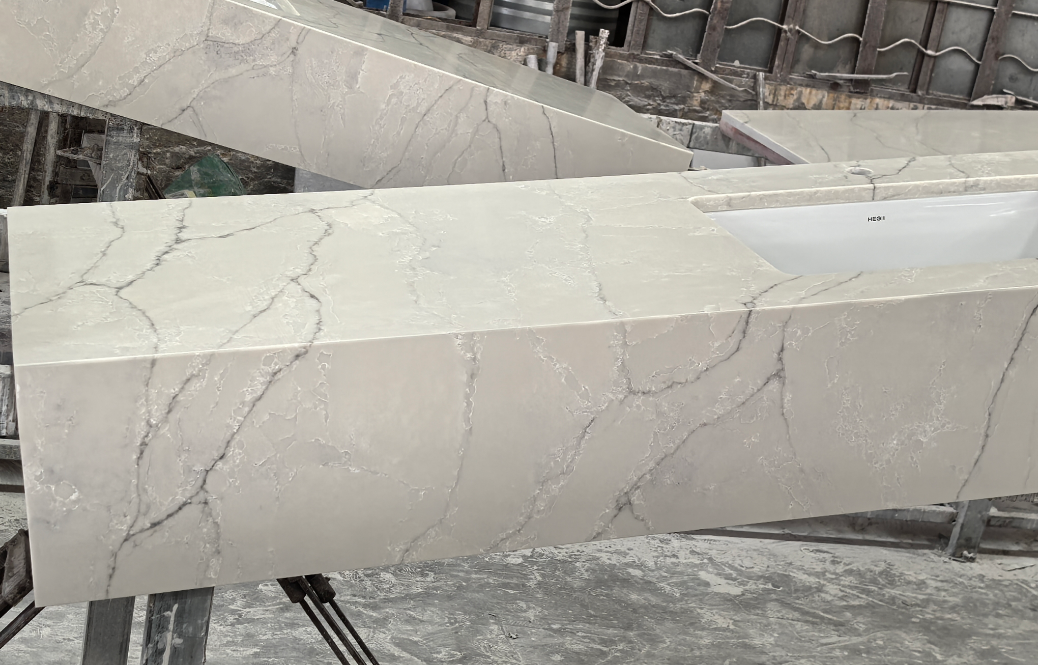
Low silica quartz is the perfect replacement for traditional high-silica engineered stone, featuring popular Australian warm-tone, calacatta gold and earth-tone slab designs.
Advantages: Matches classic quartz aesthetics; excellent stain and scratch resistance; compatible with standard local fabrication processes; ideal for kitchen benchtops and waterfall islands.
Limitations: Mandatory batch-by-batch NATA testing; non-thermoformable for curved designs; slightly higher cost than traditional high-silica quartz.
Best For: Residential kitchen renovations, mass housing projects, wholesale stock for Australian fabricators.
2. Acrylic Solid Surface
As a fully silica-free material, acrylic solid surface Australia is the top choice for seamless and curved modern interior designs.
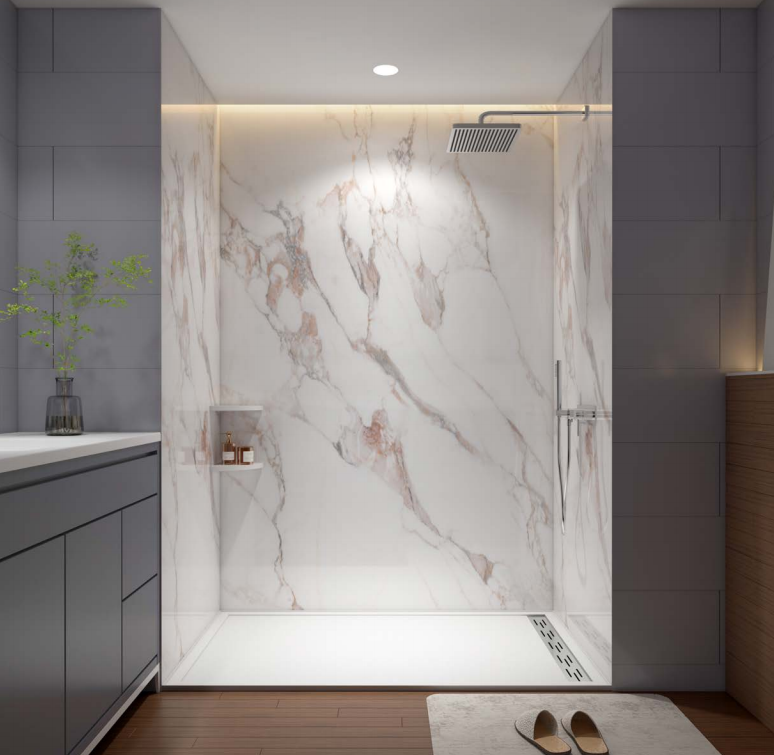
Advantages: Zero compliance risk; fully thermoformable for curved islands, vanities and reception desks; invisible seamless joints for shower walls; repairable surface; food-safe for hospitality commercial projects.
Limitations: Moderate heat resistance, not suitable for heavy-duty family kitchen countertops.
Best For: Bathroom wet zones, hotel fit-outs, curved custom designs, office and café reception counters.
3. Sintered Stone
Sintered stone is a high-performance inorganic material widely used for premium and outdoor Australian projects.
Advantages: Superior heat, UV and scratch resistance; non-porous and low-maintenance; suitable for both indoor and outdoor applications.
Limitations: High fabrication waste rate; visible seams; unable to create complex curved shapes.
Best For: Luxury residential projects, alfresco kitchens, outdoor commercial benchtops.
Quick Material Selection Guide for Australian Projects
-
Family Kitchens: Low Silica Quartz
-
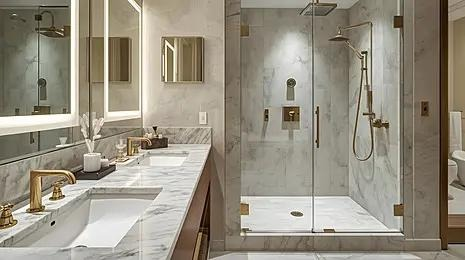
Bathrooms & Seamless Showers: Acrylic Solid Surface
-
Outdoor & Alfresco Areas: Sintered Stone
-
Curved & Custom Commercial Fit-outs: Acrylic Solid Surface
-
Mass Residential Renovations: Low Silica Quartz
Compliance Tips for Australian Importers & Distributors
1. Always match valid NATA test reports with every low silica quartz benchtops shipment to avoid customs rejection.
2. Maintain dual compliant inventory: low silica quartz for kitchen projects andacrylic solid surface Australia for wet-area and custom design projects to cover full market demands.
3. Specify materials by project scenario to reduce fabrication errors and customer complaints.
Conclusion
No single compliant benchtop material post ban suits all Australian projects. Low silica engineered stone Australia remains the best option for traditional kitchen renovations. Acrylic solid surface dominates seamless wet zones and curved custom designs, while sintered stone benchtop is unbeatable for high-performance outdoor and luxury applications.
We supply fully compliant low silica quartz and acrylic solid surface sheets with complete NATA silica certificates, asbestos-free reports and technical documents to support smooth import and project delivery for Australian wholesalers and fabricators.
CTA: Request our latest 2026 slab catalogue, free samples and full compliance document pack for your Australian projects.
Solid Surface Vs. Quartz vs. Granite: The UltimateCountertop Material Comparison for CommercialProjects
Pure Acrylic vs Modified Acrylic Solid Surface: How to Identify and Choose Correctly