
Pure Acrylic vs Modified Acrylic Solid Surface: How to Identify and Choose Correctly
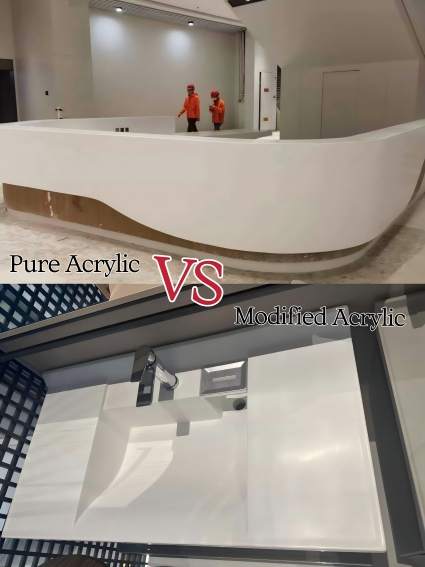
1. Core Material Differences
Pure Acrylic Solid Surface (Full MMA)
A premium solid surface formulated with 100% pure MMA/PMMA acrylic resin (resin content ≥40%) and high-purity aluminum hydroxide, with zero polyester resin. It delivers outstanding durability and stable physical performance.
Modified / Composite Acrylic Solid Surface
An affordable entry-level solid surface blended with only 4%‒10% MMA acrylic resin and large amounts of low-cost unsaturated polyester resin, featuring lower overall resin content and weaker stability.
If low-quality resin is used, or cheap calcium powder is mixed into aluminum powder, the material will suffer from frequent cracking, yellowing and discoloration, stubborn staining and color penetration, as well as sour and unpleasant odors.


2. 7 Practical On-Site Identification Methods
1. Check Official Test Report (Most Authoritative)
Pure Acrylic: Test reports contain only PMMA/MMA ingredients (no polyester resin), with Barcol hardness of 65‒70.
Modified Acrylic: Test reports show a mix of MMA and unsaturated polyester, with Barcol hardness of 55‒60.
2. Judge by Price
With identical thickness and finish, pure acrylic costs 20%‒50% more. It is ideal for integrated basins and curved custom countertops, while modified acrylic is mostly used for standard indoor vanity tops.
3. Combustion Test with Scrap Samples
Pure Acrylic: Smokeless light-blue flame with a mild sweet creamy odor and self-extinguishes without fire. The cooled residue is crisp and easily crushable.
Modified Acrylic: Yellow flame with slight black smoke and a harsh pungent sour odor. It produces sticky colloidal drips that remain viscous after cooling.
4. Thermal Bending & Toughness Test
Pure Acrylic: Excellent flexibility and thermoformability. It supports heat bending for large radius arcs and integrated shapes without blistering or cracking.
Modified Acrylic: Low ductility, only suitable for simple straight edges. High temperature easily causes blistering and cracking, making complex curved designs unachievable.
5. Stain Resistance & Anti-Yellowing Performance
Pure Acrylic: Ultra-low porosity delivers strong resistance to oil and daily stains. Superior UV resistance prevents sun-induced yellowing, perfect for kitchens and balconies.
Modified Acrylic: Susceptible to stain penetration and discoloration. It yellows noticeably within 1‒3 years under sunlight and is only suitable for fully shaded indoor areas.
6. Side Light Transmission Observation
Pure Acrylic: The side cross-section features uniform translucency and a smooth, consistent internal texture.
Modified Acrylic: The cross-section appears foggy and gray, with yellowish transmission and turbid internal particles.
7. Knocking Sound Distinction
Pure Acrylic: Produces a solid, muffled knocking sound with no hollow echo.
Modified Acrylic: Produces a crisp, empty sound with an obvious hollow echo.
3. Performance Comparison Table

4. Key Purchase Tips & Avoid Traps
Sellers who only advertise generic “acrylic stone” usually supply modified acrylic. Always specify 100% pure acrylic with ≥40% MMA resin content in the contract.
Choose pure acrylic for kitchen countertops, sunlit balconies and curved integrated designs to avoid yellowing, cracking and seam darkening.
Conduct a scrap sample combustion test before delivery to avoid material substitution.
Avoid low-cost calcium-powder modified acrylic; prioritize products with aluminum hydroxide filler for better durability.
Final Summary
Pure acrylic is the durable, long-term choice for high-frequency use, sun-exposed spaces and curved custom countertops.
Modified acrylic suits budget, fully shaded indoor vanities. Always verify official certificates and test samples to avoid counterfeit and low-quality materials.